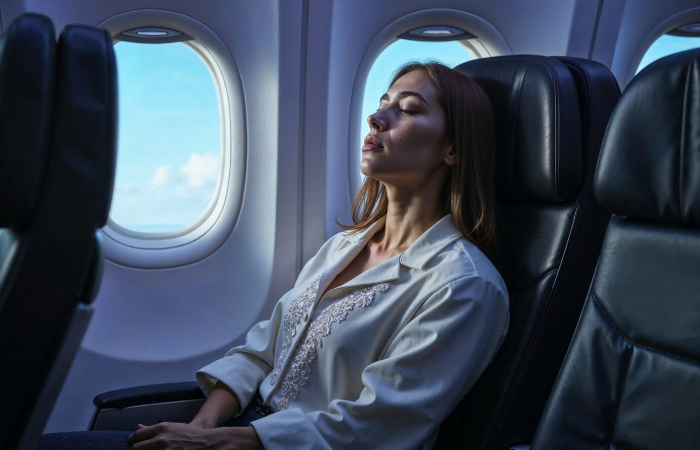
Ever cried during a random movie on a flight? Or felt like that one glass of wine hit way too hard midair? Don’t worry—you’re not dramatic. Science says flying messes with your brain and body in sneaky ways.
Emotions on Overdrive
There’s no official study saying planes make us cry more, but many travellers swear they turn into softies mid-flight. Neuroscientist Dustin Hines says this might be because of low oxygen and messed-up sleep cycles on long flights. When you’re tired and not breathing in as much oxygen, your brain’s emotion center (the amygdala) and logic center (the prefrontal cortex) stop syncing properly. That “disconnect” can make you feel all the feels—cue the unexpected tears.
Your Taste Buds Are Not Broken
Ever wondered why plane food tastes… blah? Turns out, it’s not just the food—it’s you. A German study found that salty foods taste 30% less salty and sweet foods 20% less sweet at altitude. Wild, right?
Why? Your brain’s trying to do too much at once. The constant plane noise (about as loud as a vacuum cleaner) affects how your brain’s insula handles taste. Add dry cabin air to the mix, and your nose (which helps with smell, and thus taste) can’t do its job properly. The result? Everything tastes kinda meh—except umami, which weirdly gets better.
That One Drink Feels Like Three
Feel tipsy faster when you’re sipping wine midair? There’s a reason. Planes have lower oxygen levels, like you’re in a high-altitude city. This condition, called hypoxia, makes your body act drunker, even if your blood alcohol level is the same.
Your brain, dehydrated and low on oxygen, becomes more sensitive to booze. So, that one cocktail at 30,000 feet might hit like two on the ground.
Bottom Line? It’s Not You, It’s the Altitude
Next time you get emotional, feel extra buzzed, or wonder why your snack is flavorless at cruising altitude, just remember: flying does weird things to your brain and body. Normal. Totally science.