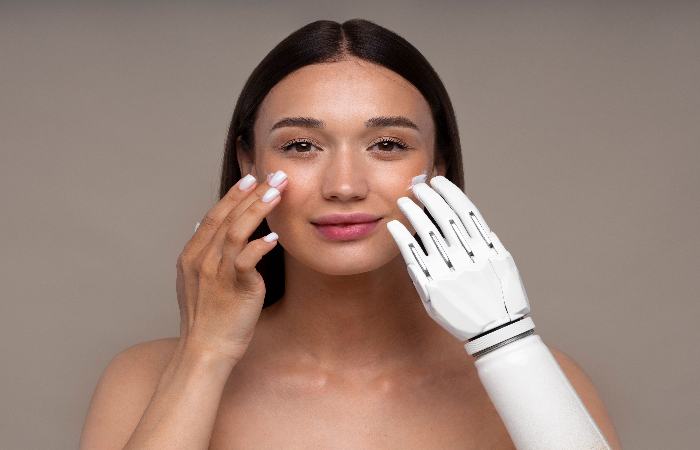
As AI becomes more integrated into daily life, its algorithms reinforce traditional beauty standards. Apps like Gencraft, marketed for generating any image, predominantly showcase “ideal” women—thin, white, and conventionally attractive. This reflects a deeper issue where technology replicates, rather than redefines, societal norms. While early feminist thinkers like Donna Haraway and Ursula K. Le Guin envisioned AI as a tool to dismantle gender binaries, reality has proven otherwise. Instead, AI perpetuates male fantasies, exemplified by AI-generated “girlfriends” and apps like Replika, downloaded over 100 million times.
Feminist artists fight back
Artists Ann Hirsch and Maya Man are countering these norms with their project Ugly Bitches. Using AI trained on dolls like Bratz and American Girl, they produce unsettling images that subvert beauty standards. These “glitch” representations, paired with influencer-style captions altered to mock traditional compliments, critique society’s obsession with beauty. Hirsch’s earlier critique of NFTs, highlighting their portrayal of generic, attractive women, inspired the project. Despite their satirical intent, some male collectors misunderstood the art, seeking to “own” an “ugly bitch,” highlighting how deeply ingrained the male gaze is in digital culture.
Deconstructing the gaze
Swedish artist Arvida Byström explores the intersection of AI, porn, and the male gaze in her project In the Clouds. By feeding images of herself into a “nudify” app, she exposes AI’s limited and hypersexualized understanding of female bodies. As Byström manipulates her appearance, the AI’s responses become grotesque—adding extra nipples or confusing body parts—revealing how the technology distorts women into fetishized objects.
Feminist critiques, like Aria Dean’s essay on the whiteness of “selfie feminism,” remind us that these artistic interventions often center privileged bodies. However, Byström’s work forces viewers to confront AI’s regurgitation of societal norms, prompting a broader conversation about representation and visibility in the digital age. In exposing AI’s biases, these artists challenge us to rethink beauty, gender, and the gaze in technology-driven culture.