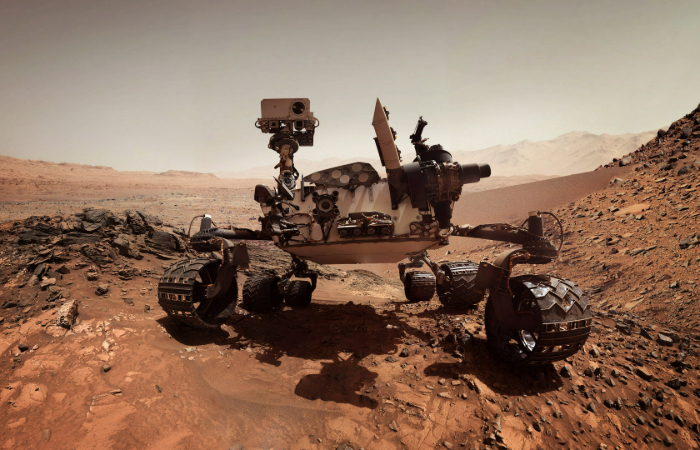
There’s a buzz of excitement among scientists with NASA’s Perseverance mission, as the rover might have stumbled upon indications of past life within a Martian rock. Although the findings are promising, the team is approaching them with caution and emphasizes the need for additional studies to verify the potential discovery.
Discoveries on Mars: Traces of Ancient Life?
NASA’s Perseverance Rover stumbled upon a captivating rock shaped like an arrowhead, affectionately named “Cheyava Falls.” This discovery is stirring excitement among scientists because it bears the hallmarks and compounds that could indicate the presence of ancient microbial life. Billions of years ago, Mars boasted a much wetter climate, possibly nurturing life forms. The rock revealed organic molecules within its core, elements fundamental for the biology of life as we comprehend it.
Traversing the rock’s body are streaks filled with calcium sulfate. This finding hints at a past where water flowed through “Cheyava Falls,” creating these mineral veins. Water, as we know, is vital for life to thrive, elevating the importance of this discovery.
Adding to the this, the rover identified multiple small patches, each encircled by a dark halo, akin to the spots of a leopard. These halos are rich in iron and phosphate, two elements associated with the activities of microbes on Earth. The presence of these substances in such patterns further suggests that microbial life may have once flourished on Mars, engaging in chemical processes similar to those seen in Earth’s ecosystems.
This remarkable discovery opens up new avenues for understanding Mars’ history and its potential to have supported life, drawing us one step closer to unraveling the red planet’s most profound mysteries.
Mars Exploration Brings Unforeseen Discoveries
David Flannery, a notable scientist involved with the Perseverance rover team from Queensland University of Technology in Australia, shared his astonishment at the recent findings on Mars. He explained how the unique markings discovered by the rover, much like the ones found on Earth, usually point to ancient microbial life that existed below the surface.
The existence of such features in Martian rocks took the scientific community by surprise, hinting at parallels between Earth’s earliest forms of life and potential life on Mars. This revelation adds an exciting dimension to our quest to understand the history of life in our solar system.